If your gums bleed when brushing, your breath never feels fresh, or your mouth still feels sensitive after a dental procedure, your body is not betraying you — it is warning you.
And in many cases, those problems can improve significantly when the right daily habits are followed consistently.
1. Focus on Removing Bacteria Every Day
The biggest mistake most people make is brushing quickly but leaving bacteria behind along the gumline. Effective brushing for two full minutes — especially where the teeth meet the gums — helps stop plaque from hardening into tartar.
Adding floss or interdental brushes once daily removes bacteria from areas a toothbrush cannot reach.
Small daily cleaning habits produce far bigger results than occasional aggressive brushing.
2. Treat Bleeding Gums Early — They Often Improve Faster Than People Expect
Bleeding gums are usually caused by inflammation from bacteria buildup. When plaque is reduced consistently, the gums often become firmer, healthier, and less swollen within weeks.
Many patients are surprised how quickly:
- bleeding decreases,
- bad breath improves,
- swelling settles,
- and gum sensitivity reduces
once they become consistent with oral hygiene and professional cleanings.
3. Protect Healing After Extractions or Dental Procedures
Healing improves dramatically when patients:
- avoid smoking,
- avoid hard rinsing,
- keep the mouth clean,
- stay hydrated,
- and follow medication instructions properly.
The goal is to protect the healing clot and allow the tissue to repair itself naturally. Proper aftercare reduces complications and helps patients recover faster and more comfortably.
4. Strengthen Your Mouth Through Daily Habits
Healthy gums are strongly connected to everyday lifestyle choices.
Simple changes such as:
- drinking more water,
- reducing sugary drinks,
- controlling diabetes,
- eating less processed snacks,
- and attending regular dental checkups
can significantly lower the bacterial burden inside the mouth.
5. Use the Right Antibacterial Support When Needed
Sometimes brushing alone is not enough, especially during periods of gum inflammation, after dental procedures, or when bacteria levels are high.
That is where chlorhexidine can help. Used properly and for the recommended duration, it helps reduce harmful bacteria and supports healthier gums as part of a complete oral-care routine.
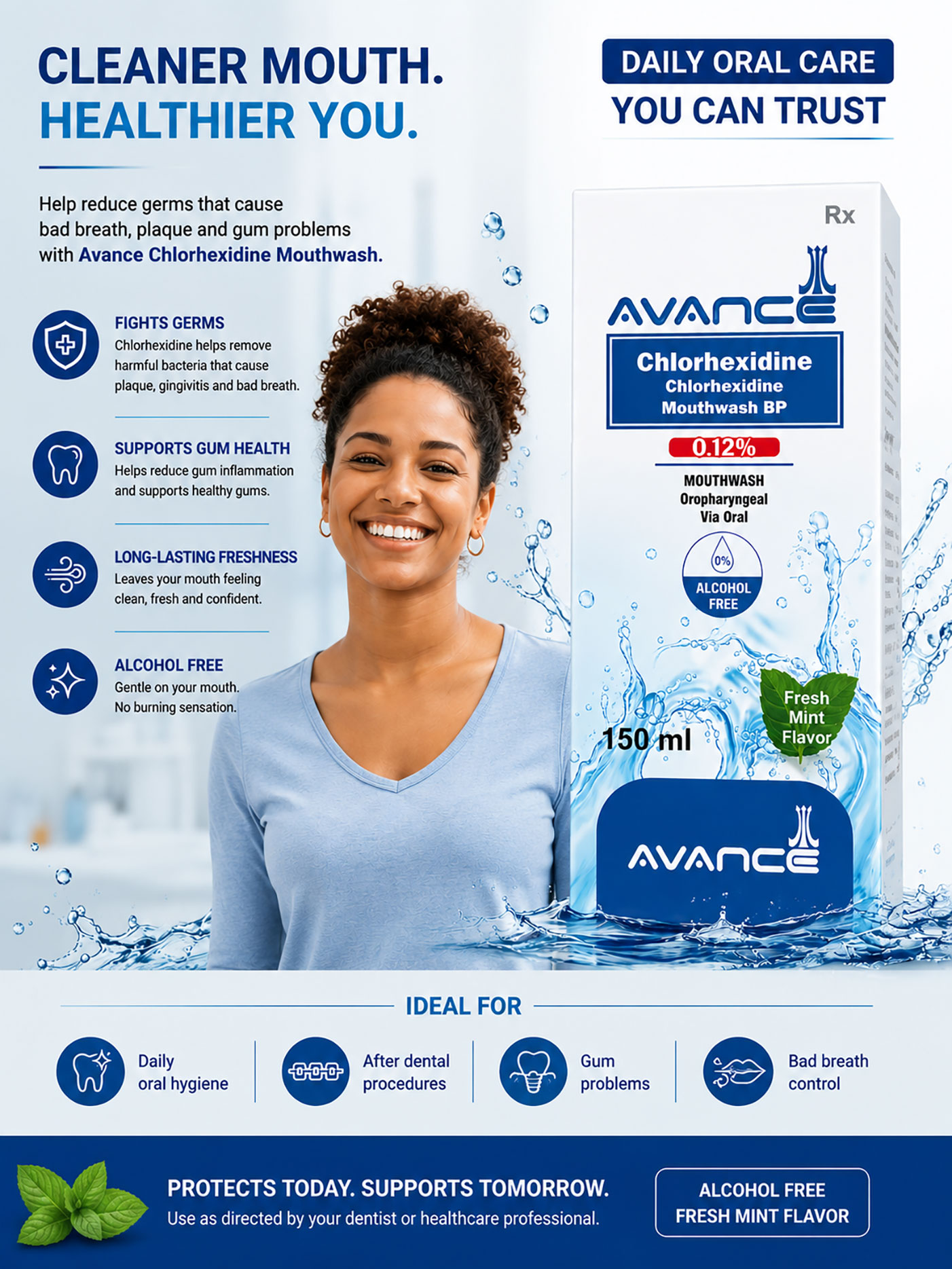
For a practical solution, you can try our Chlorhexidine Mouthwash 0.12% to support healthier gums and improved oral hygiene habits.
The 0.12% strength is commonly preferred because it provides strong antibacterial action while helping reduce the likelihood of side effects often associated with stronger or prolonged chlorhexidine use, such as heavy tooth staining, altered taste sensation, and excessive tartar buildup.