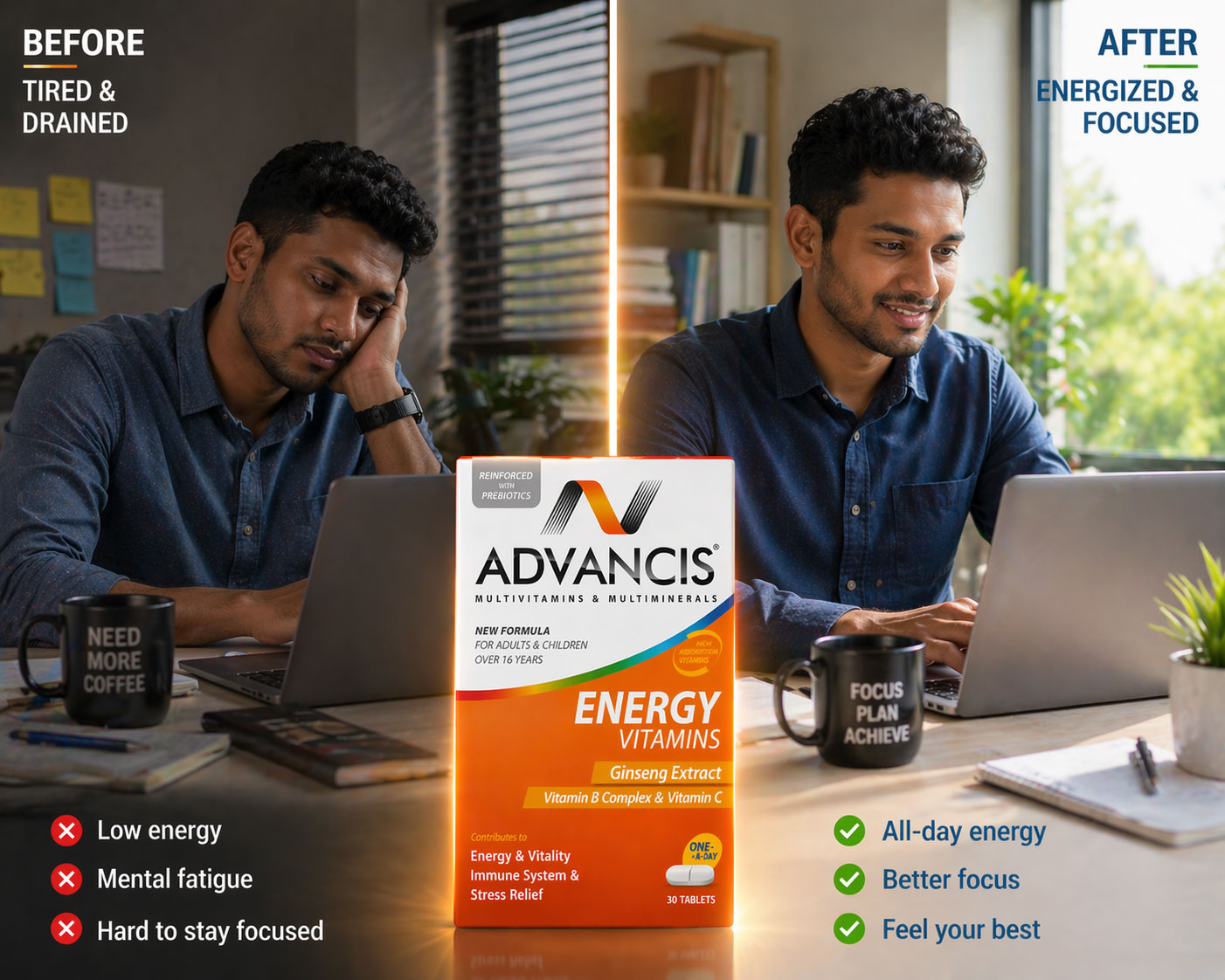
Fatigue is often misunderstood as a lack of rest. In reality, it is more commonly a failure of coordinated energy systems within the body. When red blood cell production, cellular metabolism, gut absorption, immune balance, and stress regulation begin to decline together, the result is a measurable drop in usable energy.
The key insight is this: your body is not simply “low on energy”—it is struggling to produce, transport, and sustain it efficiently.
1. Rebuild Your Body’s Natural Energy Production
Your cells rely on nutrients—especially B vitamins—to convert food into usable energy. Without enough of these nutrients, your body struggles to keep up with daily physical and mental demands.
What Helps:
- Eat more foods naturally rich in B vitamins such as eggs, fish, beans, and whole grains
- Reduce excessive sugar intake, which can lead to energy crashes later in the day
- Avoid relying heavily on caffeine to push through fatigue
When your cells can produce energy more efficiently, energy levels tend to feel steadier throughout the day.
2. Improve Oxygen Delivery Throughout the Body
Your brain and muscles need oxygen to function properly. Iron, folate, and vitamin B12 help your body produce healthy red blood cells that transport oxygen where it is needed most.
What Helps:
- Combine iron-rich foods like spinach, lentils, red meat, or chickpeas in your meals with Vitamin C sources like citrus fruits to improve absorption
- Take short walks or light movement breaks during long periods of sitting
- Pay attention to signs such as dizziness, low stamina, or breathlessness during activity
Better oxygen delivery can support improved concentration, physical endurance, and reduced weakness.
3. Repair Your Gut and Improve Nutrient Absorption
Even a healthy diet may not help if your digestive system cannot absorb nutrients properly. Gut bacteria play an important role in nutrient uptake and overall energy balance.
What Helps:
- Increase intake of fiber-rich foods such as oats, bananas, onions, and apples
- Add fermented foods like yogurt or kefir to support healthy gut bacteria
- Avoid overeating highly processed fast foods late at night
A healthier gut environment helps your body make better use of the nutrients you consume.
4. Reduce the Hidden Effects of Stress on Energy
Chronic stress places extra demand on the body and can rapidly drain important nutrients. Over time, this affects mental clarity, mood, sleep quality, and overall energy levels.
What Helps:
- Create a more consistent sleep schedule
- Take short breaks during mentally demanding work periods
- Reduce excessive screen exposure before bedtime
Managing stress more effectively helps prevent the cycle of burnout and energy crashes.
5. Strengthen Recovery and Immune Resilience
When the body is constantly fighting inflammation, infections, or poor recovery, energy levels naturally decline. Supporting recovery helps free up more energy for daily performance.
What Helps:
- Spend time outdoors and stay physically active
- Eat foods rich in vitamin C, zinc, and selenium
- Prioritize proper rest after illness, intense work, or periods of stress
A stronger recovery system helps the body maintain more stable and sustainable energy over time.
Real energy restoration happens when these systems are supported together—not through temporary stimulants, but by helping the body function more efficiently at a deeper level.
For even faster results, taking all these factors into consideration, check out our product solution: Advancis Energy Vitamins.